Why Race Engineers Throw Out the Factory Torque Specs — And What Street Mechanics Can Learn From It
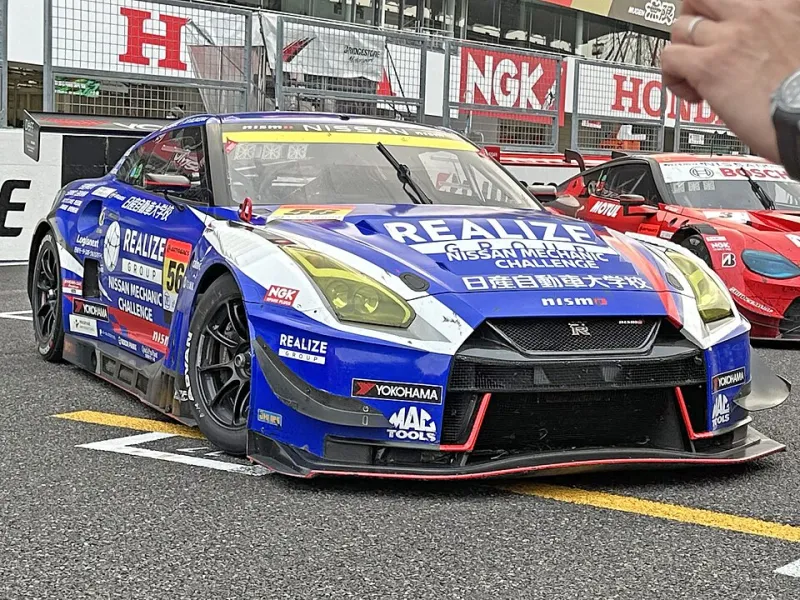
Photo: Tokumeigakarinoaoshima, CC BY-SA 4.0, via Wikimedia Commons
Pull into the paddock at any serious motorsports event — NASCAR, IndyCar, IMSA endurance racing, even a well-funded regional autocross team — and you'll find torque wrenches everywhere. But the values those wrenches are set to? They often look nothing like what's printed in any factory service manual. That's not sloppiness. It's engineering.
The divergence between OEM torque specifications and race-application values is one of the more misunderstood topics in performance mechanics. Enthusiasts sometimes assume race teams just crank everything tighter because tighter is always better. Others think racers are cutting corners to save weight or speed up pit stops. Both assumptions miss the real picture entirely.
Why Factory Specs Exist in the First Place
Before you can understand why race engineers deviate from factory specs, it helps to understand what those specs are actually optimizing for. OEM torque values are designed around a set of assumptions: production-grade fasteners, production-grade mating surfaces, ambient temperature conditions, long service intervals, and — critically — a wide margin for error. The factory spec on your truck's wheel lugs has to work correctly when torqued by a tire shop tech using a pneumatic impact gun with questionable calibration, in January, in North Dakota. That's a very different design constraint than what a race engineer is working with.
Factory specs are also set conservatively to account for variables the manufacturer can't control. Thread condition, corrosion, lubricant residue, fastener reuse — all of these affect the actual clamp load delivered at a given torque value. The OEM builds in margin. A lot of it.
What Changes in a Race Environment
Race applications strip away most of those variables — and introduce a whole new set. Here's where the real divergence starts.
Fastener upgrades. Most serious race builds swap OEM fasteners for high-grade hardware — ARP studs, titanium bolts, custom aircraft-grade fasteners. These materials behave differently under load than stock hardware. A torque value calibrated for a Grade 8 steel bolt may be completely wrong for a titanium fastener of the same thread pitch. The yield strength, friction coefficient, and elastic behavior are different. Race engineers spec torque values for the actual hardware being used, not the hardware the factory assumed.
Thermal extremes. A street engine might see coolant temps between 180°F and 220°F in normal operation. A race engine might run significantly hotter, and more critically, it cycles through those temperatures far more aggressively. Thermal expansion affects clamp load. Engineers working with aluminum cylinder heads on steel studs have to account for the fact that those materials expand at different rates. In some cases, torque-to-yield specifications are replaced with angle-based torquing procedures to ensure consistent clamp load across that thermal range.
Modified mating surfaces. Ported heads, decked blocks, aftermarket gaskets — all of these change the surface compliance that the factory spec was designed around. A thicker head gasket compresses differently than a stock unit. A fire-ring gasket has completely different seating requirements than a multilayer steel OEM gasket. Using the stock head bolt torque value on a setup with an aftermarket head gasket and ported head is a recipe for either a blown gasket or a warped head.
Reliability vs. longevity tradeoffs. This one surprises people. Race teams are often optimizing for reliability over a defined, short interval — a 24-hour endurance race, a full season of sprint events — rather than the 100,000-mile service life a car manufacturer targets. That changes the math on fastener stress and fatigue. In some cases, race engineers actually specify lower torque values than OEM to reduce fatigue loading on critical fasteners that will be inspected and replaced regularly anyway.
The Bolt Pattern Question
Wheel fastener torque is one of the most visible examples of this divergence. OEM lug nut torque specs for most passenger vehicles fall in the 80-100 ft-lb range. Wheel studs on many race applications — particularly those running aftermarket wheels with different hub interfaces — may be torqued to different values based on stud material, thread engagement length, and the presence or absence of thread lubricant.
Race teams also pay extremely close attention to torque sequence and re-torque intervals in a way that street mechanics rarely do. A wheel that's been properly torqued cold may need to be checked after the first heat cycle. This is standard practice in motorsports and nearly unheard of in a street setting — but the physics don't change just because you're not racing.
Lubrication Changes Everything
One of the most significant variables that race engineers account for — and that most street mechanics ignore — is the effect of thread lubrication on actual clamp load. A dry torque spec and a lubricated torque spec for the same fastener can differ by 20-30%. Anti-seize, thread-locking compound, oil, and dry conditions all produce different friction coefficients, which means the same applied torque produces different actual clamp loads.
Most factory torque specs assume clean, dry threads unless otherwise specified. Race applications frequently use specific lubricants — moly paste on exhaust fasteners, light oil on head studs, dry installation on wheel fasteners — and the torque values are set accordingly. Using anti-seize on a fastener with a dry torque spec and not adjusting the value downward is a common mistake that leads to overtorqued and damaged fasteners.
What Street and Performance Mechanics Should Take Away
You don't have to be building an endurance race car to apply these principles. The lesson for any performance enthusiast is this: torque specifications are not universal truths. They're engineered values tied to specific materials, conditions, and design assumptions. When any of those variables change — different fasteners, different gaskets, different operating temperatures, different lubricants — the spec may need to change too.
The tools to do this work correctly — quality torque wrenches, angle gauges, calibrated equipment — are more accessible than ever. What matters is understanding why a given torque value exists before you start deviating from it. Race engineers don't ignore factory specs because they don't respect them. They ignore them because they understand them well enough to know when they don't apply.
That's a standard worth bringing back to the home garage.