Why Your $400 Torque Wrench Died First: The Uncomfortable Truth About Premium Tool Failure
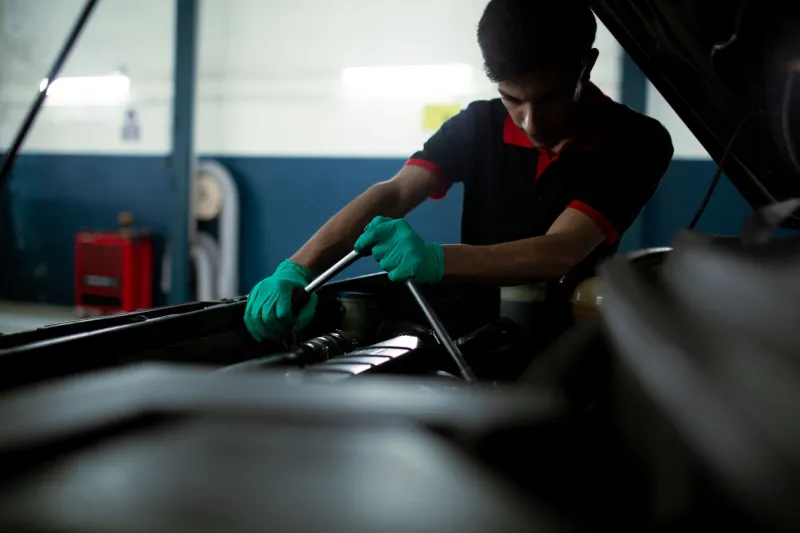
Here's a scenario that plays out in shops all over the country: A technician drops serious cash on a top-shelf torque wrench — the kind with a brushed finish, a satisfying click, and a warranty card that feels like a small mortgage. Six months later, a buddy's $60 harbor-freight special is still clicking away, and the expensive one is sitting in a drawer, out of calibration and temperamental as a wet cat.
It sounds backwards. It is backwards. But it happens more than the tool industry would like to admit, and the reasons why are worth understanding before your next purchase — or before you accidentally destroy the wrench you already own.
The Confidence Trap: When Expensive Feels Indestructible
The single biggest killer of premium torque wrenches isn't a manufacturing defect. It's the psychology of ownership.
When you spend real money on a tool, your brain makes a quiet assumption: this thing can take it. You leave it in the bottom of a toolbox under a pile of sockets. You toss it into a bag for a mobile job. You let a coworker borrow it without a second thought. You'd never treat a $60 wrench that casually — you'd baby it, hang it on a peg, and watch it like a hawk.
Budget tools get babied. Premium tools get abused. That's the confidence trap, and it's responsible for more early failures than any design flaw.
High-end wrenches are precision instruments. The internal mechanism — whether it's a cam-and-pawl system, a dual-range clutch, or a strain gauge in a digital model — is engineered to tight tolerances. Those tight tolerances are what make the wrench accurate. They're also what makes it vulnerable to the kind of casual mistreatment that a cruder, sloppier mechanism might shrug off.
The Maintenance Nobody Mentions at the Register
Ask the average mechanic how they maintain their torque wrench, and you'll get one of two answers: a blank stare, or "I wipe it down sometimes."
Here's what most people aren't told at purchase: a click-style torque wrench should be backed down to its lowest setting after every single use. Every time. Without exception.
When you leave a wrench stored at a high torque setting, you're keeping the internal spring under constant tension. Springs under constant tension fatigue. Fatigue means the spring loses its calibrated resistance over time, which means your wrench starts lying to you. A $400 wrench with a fatigued spring is less trustworthy than a $60 wrench that's been properly stored.
Digital and electronic models have their own maintenance blind spots. Batteries left inside during long storage periods can corrode contacts. Moisture gets into sensor housings. Firmware — yes, some modern torque wrenches have firmware — goes unupdated. These aren't hypothetical failure modes. They're documented warranty claims that manufacturers quietly attribute to "user error."
What the Warranty Actually Covers (Hint: Probably Not What You Think)
Premium tool warranties are marketing documents as much as they are legal protections. Read the fine print on most high-end torque wrench warranties and you'll find language that exempts calibration drift, wear from "normal use," and anything the manufacturer can characterize as improper handling.
Calibration drift — the gradual loss of accuracy that happens to every torque wrench over time — is almost never covered. The warranty might cover a cracked housing or a stripped drive, but the core function of the tool, its accuracy, is typically outside the coverage window after a short initial period.
Budget wrench buyers don't have this illusion to begin with. They know the warranty is a piece of paper, so they calibrate regularly (or factor in the cost of occasional replacement). Premium tool buyers often assume the warranty is a backstop against all failure modes. When they discover it isn't, the wrench is already compromised.
The Calibration Gap: Who's Actually Checking?
ISO 6789 — the international standard for torque wrench calibration — recommends recalibration every 5,000 cycles or every 12 months, whichever comes first. In a busy shop, 5,000 cycles can happen in a few months of regular use.
Most professional mechanics know this standard exists. Fewer actually follow it. And here's the uncomfortable data point: budget wrench users, statistically, tend to replace or recalibrate their tools more frequently — not because they're more diligent, but because they expect degradation and plan for it.
Premium wrench owners often go years between calibration checks, assuming that the initial quality of the tool means it holds its accuracy indefinitely. It doesn't. No torque wrench does. The mechanism degrades with use regardless of the name stamped on the handle.
The Practical Checklist: Making Any Wrench Last
Regardless of what you paid, these habits will extend the working life of your torque wrench significantly:
After every use:
- Back the adjustment down to the lowest torque setting before storing
- Wipe down the exterior with a clean, dry rag
- Return it to its case or designated storage spot — not the bottom of a drawer
Monthly (or every 500 cycles in a busy shop):
- Inspect the drive head for wear or slop
- Check the adjustment mechanism for smooth, consistent movement
- For digital models, inspect battery contacts for corrosion
Annually (or every 5,000 cycles):
- Send the wrench for professional calibration, or test it against a certified torque tester
- Document the calibration date and results
- Evaluate whether the wrench is still appropriate for its current workload
General rules:
- Never use a torque wrench as a breaker bar — ever
- Don't loan it without a conversation about proper use
- Store it horizontally or in its case, not hanging vertically by the head
- Keep it away from extreme heat, which affects spring tension and sensor accuracy
The Bottom Line
Premium torque wrenches are worth the investment — but only if you respect what you're actually buying. You're not buying indestructibility. You're buying tighter manufacturing tolerances, better materials, and (usually) more accurate out-of-the-box performance. None of that matters if the tool is stored wrong, never recalibrated, and treated like a hammer.
The cheap wrench that's still clicking after three years isn't a miracle of budget engineering. It's a tool that got treated like a precision instrument because nobody assumed it could take abuse.
Treat your expensive wrench the same way. Back it down, store it right, calibrate it regularly, and read the warranty before you assume it covers everything. Do that, and the investment makes sense. Skip those steps, and you're just paying more for a faster trip to the tool graveyard.
