Your Factory Torque Spec Is a Lie — If You're Not Using OEM Fasteners
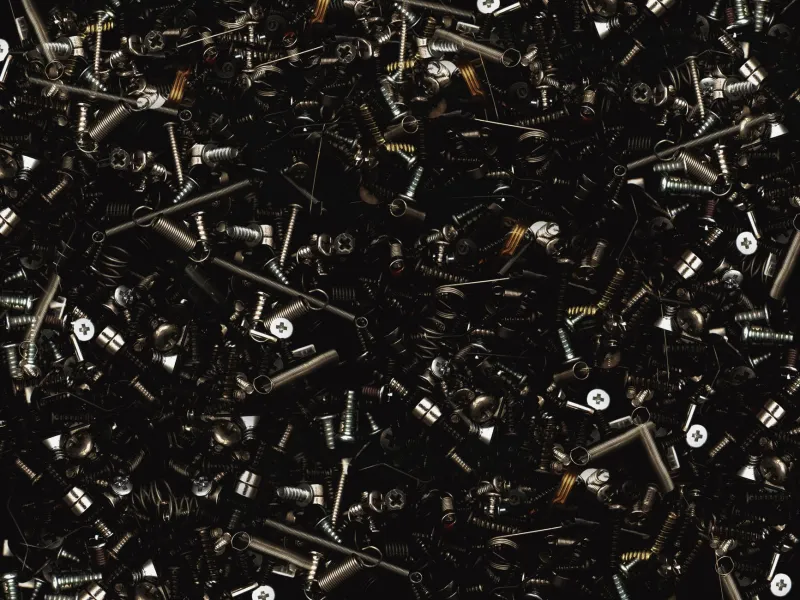
Let's get something out of the way upfront: your factory service manual isn't wrong, exactly. The torque specs printed in those pages are real, tested, and validated by engineers who spent serious time getting them right. The catch? Every single one of those specs was developed around a very specific fastener — one with a defined thread pitch, a precise surface finish, a particular coating, and a known friction coefficient. The moment you swap in a bolt from a different supplier, you've quietly changed the equation. And the manual has no idea.
This is one of those things that experienced mechanics either learned the hard way or quietly figured out over years of turning wrenches. But it doesn't get talked about enough, especially now that parts sourcing has gotten so fragmented. Between online marketplaces, budget aftermarket brands, and even premium performance suppliers, the fastener you're actually threading in might be a long way from what the OEM spec assumed.
Why Torque Specs Are Fastener-Specific by Design
When an automaker's engineering team sets a torque value, they're not just picking a number that sounds right. They're solving for a specific clamping force — the actual tension that holds two components together under load. Torque is just the tool they use to achieve that tension, and it's an indirect measurement at best.
The relationship between applied torque and actual clamping force depends heavily on friction. Thread friction, under-head friction, surface finish, lubrication, plating — all of it affects how much of your torque input actually converts to clamping load. OEM fasteners are manufactured to tight tolerances, and their friction characteristics are known quantities. The spec in your manual accounts for all of that.
Change the fastener, and you change the friction. Change the friction, and the same torque value now produces a different clamping force — sometimes more, sometimes less, sometimes dangerously off in either direction.
The Coating Problem Nobody Talks About
One of the sneakiest variables is surface coating. OEM bolts often come zinc-plated, phosphate-coated, or treated with specific anti-corrosion finishes that also serve as built-in lubricants. These coatings lower friction in a controlled, predictable way. When engineers write that 85 ft-lb spec for your cylinder head, they're assuming that coating is present and doing its job.
A lot of aftermarket fasteners — even decent ones — use different coatings. Some use plain zinc where the OEM used a wax-based lubricant. Some use black oxide, which behaves differently under torque. Some come completely dry when the OEM spec assumed a lightly lubricated thread.
The result? You can hit the exact number on your torque wrench and still end up with a fastener that's either under-tensioned and loose or over-tensioned and stretched. Neither outcome is good. One leads to joint failure. The other leads to a snapped bolt or a stripped thread.
What Performance Fastener Suppliers Actually Know
Here's where it gets interesting. The better performance fastener companies — the ones supplying race shops and serious builders — understand this completely. They publish installation specs that are different from OEM values, specifically because their fasteners behave differently. ARP, for example, includes detailed torque and lubrication specs with their hardware that often diverge significantly from factory numbers. That's not arrogance. That's engineering honesty.
The problem is that a lot of mechanics see the ARP bolt going into the same hole as the OEM bolt and assume the same spec applies. It doesn't. ARP's fasteners are typically higher-strength alloys with different friction characteristics, and their specs account for that. Using the factory number on an ARP stud — especially without their recommended lubricant — can mean you're not achieving the clamping force the application actually needs.
The same logic applies in reverse. A budget aftermarket bolt made to looser tolerances with an unknown coating might require a lower torque value than OEM to avoid yielding the threads. The manual doesn't know that either.
Real Shops, Real Failures
Talk to mechanics who've been around long enough and you'll hear the stories. Head gasket jobs that leaked within 10,000 miles even though the tech swore the torque sequence was perfect. Suspension components that developed clunks after a year when the original hardware lasted a decade. Exhaust manifold studs that snapped during torquing when the spec seemed totally reasonable.
In a lot of those cases, the fastener was the variable that changed. Someone sourced bolts from a different supplier — maybe because the OEM parts were backordered, maybe to save a few bucks, maybe because the aftermarket option showed up faster. The torque spec stayed the same. The fastener didn't.
This isn't hypothetical. It's a real pattern, and it's one that tends to get misdiagnosed. When a gasket fails, people blame the gasket. When a bolt snaps, people blame the torque wrench. The actual culprit — a fastener with different friction characteristics than the spec assumed — often never gets identified.
What You Can Actually Do About It
First, know what you're installing. If you're using OEM fasteners, the factory spec is your starting point and it's usually solid. If you're using aftermarket or performance hardware, dig into the manufacturer's documentation before you pick up a wrench. A reputable fastener supplier will have torque recommendations. If they don't, that tells you something about how seriously they take their product.
Second, pay attention to lubrication. Most OEM specs assume dry or mildly lubricated threads. If you're adding anti-seize or thread lubricant that wasn't specified, you're changing the friction coefficient and you need to adjust your torque accordingly. The general rule of thumb is to reduce torque by around 10-20% when adding lubricant to a dry-spec fastener, but the actual number depends on the lubricant and the application. Do the research.
Third, don't ignore grade markings. An OEM spec written for a Grade 8 bolt applied to a Grade 5 replacement is a recipe for problems. Same torque, weaker fastener, different stretch characteristics. It matters.
Finally, consider a torque-to-yield awareness check. Many modern OEM fasteners are designed to be torqued to yield — they're single-use by design. Aftermarket replacements may or may not behave the same way. If you're reusing fasteners that should be replaced, or replacing TTY bolts with non-TTY hardware, the spec conversation gets even more complicated.
The Bottom Line
Factory torque specs are a starting point, not a universal truth. They're engineered for a specific fastener in a specific condition, and that context matters more than most mechanics realize. As parts sourcing gets more varied and the distance between OEM and aftermarket hardware grows wider, understanding this gap isn't just good practice — it's the difference between a job that holds and one that comes back to haunt you.
Your torque wrench can only do what you ask of it. Make sure you're asking the right question.