Torque Is Just the Ticket In: What Pro Mechanics Know About Bolt Preload That Nobody's Teaching
Every apprentice learns the same ritual: grab the torque wrench, dial in the spec, wait for the click, move on. It feels complete. Scientific, even. But if you've ever had a properly torqued head gasket fail, watched a suspension bolt back out after a fresh install, or seen a wheel stud snap under load that shouldn't have been anywhere near its limit — you already know something is missing from that picture.
What's missing is preload. And the pros who really understand it aren't exactly lining up to explain it at your local parts counter.
So What Is Preload, Actually?
Strip away the jargon and preload is simple in concept: it's the tension — the stretch — that lives inside a fastener after you've installed it, before any external load gets applied. When you tighten a bolt, you're not just spinning metal. You're elongating it. That stretch creates a clamping force between the joint surfaces, and that clamping force is what actually holds everything together.
Torque is just the method you use to induce that stretch. It's the input. Preload is the output. And here's the uncomfortable part — the relationship between the two isn't clean or predictable. A dozen variables sit between your torque wrench and the tension actually living in that bolt, and most of them are invisible.
Thread condition, lubrication, surface finish, fastener material, washer presence or absence, corrosion, re-use history — every single one of these factors changes how efficiently your applied torque converts into actual clamping force. Two identical bolts, same spec, same wrench, can end up with dramatically different preloads if one has a lightly oiled thread and the other is bone dry.
Why It Matters More Than You Think
For most fasteners on a vehicle, this variability is acceptable. The safety margins built into factory specs account for it. But on critical joints — cylinder heads, connecting rod caps, main bearing caps, wheel hubs, and certain suspension pivots — the margin shrinks. These are applications where engineers are trying to hit a fairly specific preload window, not just "tight enough."
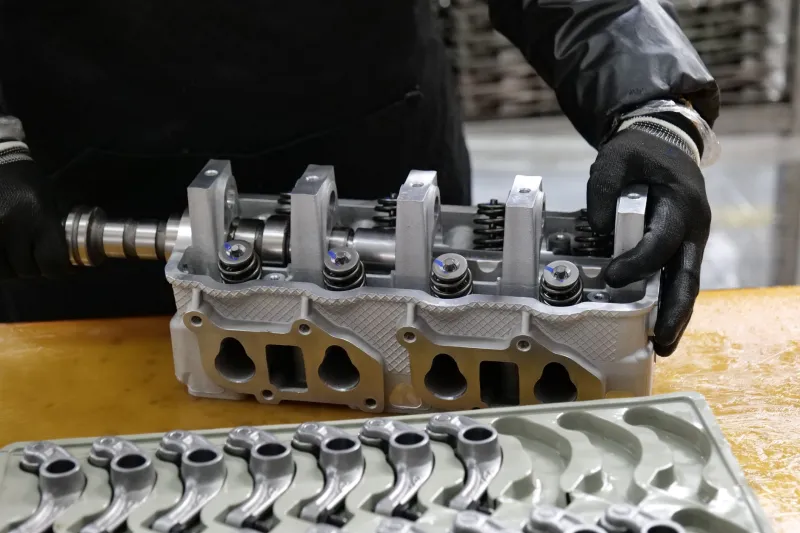
Cylinder head bolts are the textbook example. The whole point of those specs, whether it's a simple torque value or a torque-plus-angle sequence, is to stretch the bolt into a specific tension range that will maintain head gasket seal under thermal cycling and combustion pressure. If friction eats up too much of your applied torque — which happens constantly with dry or damaged threads — the bolt might click at spec and still be dramatically undertensioned. The gasket doesn't know what your wrench said. It only knows how hard it's being squeezed.
Suspension components tell a similar story. Lateral links, control arm bolts, and subframe fasteners on modern unibody vehicles are often designed to be torqued with the suspension at ride height, specifically so the rubber bushings are loaded in their neutral position. Torque the same bolt with the suspension hanging free and you've technically hit spec — but the bushing will be preloaded in a twisted state at ride height, wearing out faster and behaving differently than the engineers intended.
The Angle-Torque Method: Chasing Stretch Directly
The automotive industry figured out decades ago that torque alone was an unreliable proxy for preload. The answer, increasingly used on OEM fastener specs for critical applications, is torque-to-angle — sometimes called torque-angle or yield-controlled tightening.
The method works like this: you torque the fastener to a relatively low snug value first, just enough to seat everything properly. Then, instead of adding more torque, you rotate the fastener a specified number of additional degrees. Because the relationship between angular rotation and bolt stretch is far more consistent than the relationship between torque and stretch, you end up with much tighter preload control.
Many modern engines use this method on head bolts, main cap bolts, and rod bolts specifically because the gains in preload consistency are significant. The catch? You need a torque wrench with an angle-measurement function, or a separate angle gauge. It's also why many OEM fasteners in these applications are single-use — they're designed to stretch into the yield zone, and re-using them risks either insufficient preload or outright failure.
If you're doing a head gasket job and the manual calls for torque-plus-angle and you're skipping the angle step because your wrench doesn't have that feature, you're not doing the job the way it was designed to be done. Full stop.
How Do You Actually Verify Preload?
Short answer: in a shop environment, you mostly can't — not directly. Measuring actual bolt tension requires ultrasonic bolt tension meters or strain gauge equipment that belongs in an engineering lab, not a service bay. But there are things you can do to dramatically improve your odds of achieving the intended preload.
Control your friction variables. Follow the OEM's lubrication instructions to the letter. If the spec says clean and dry threads, use clean and dry threads. If it calls for a specific thread lubricant or sealant, use that exact product. Improvising here changes the torque-to-preload relationship in ways you can't easily predict.
Use new fasteners on critical applications. Rod bolts, head bolts on yield-tightened applications, and any stretch bolt that's been torqued to angle before should be replaced. The cost of new hardware is trivial compared to the cost of a failed joint.
Inspect threads before assembly. A chased thread in a block or head can change friction characteristics enough to matter. Run a thread chaser — not a tap, which removes material — through threaded holes before seating critical fasteners.
Calibrate your tools. This one should be obvious on a site called TorquingTool, but it bears repeating: a torque wrench that's reading 10% high or low isn't just an annoyance on critical applications, it's actively dangerous. If you're doing engine work and you can't remember the last time your wrench was calibrated, that's a problem worth solving before the head goes back on.
Respect torque sequences. Multi-bolt joints like cylinder heads and flanged connections are designed to be loaded in a specific pattern and often in multiple passes. Skipping steps or doing it in one pass creates uneven loading across the joint — which means some fasteners will end up over-preloaded and others under.
The Bottom Line
Torque specs aren't wrong. They're just incomplete descriptions of what's actually happening inside a fastener. The number on your wrench is a carefully chosen input designed to produce a specific output — preload — under a specific set of conditions. Change the conditions and the output changes, even if the number stays the same.
Pro mechanics who understand this don't necessarily work slower or use exotic equipment. They just pay attention to the variables that most technicians treat as background noise. Clean threads. Correct lubricant. Fresh hardware on yield-critical fasteners. Angle gauges where the job calls for them. Calibrated tools, always.
Preload is the actual goal. Torque is just the road you take to get there. The mechanics who keep that distinction clear are the ones whose work holds together — literally.